Kamen Rider has motorcycles, monsters, transformation belts, tragic heroes, ridiculous sound effects, and more seasons than any reasonable newcomer knows what to do with. Here is how to choose the right first series without beginning a second career in franchise research.

You have probably seen Kamen Rider even if you have never watched an episode.
Maybe it was a clip of a masked hero launching into a flying kick. Maybe it was a photograph of a spectacularly complicated transformation belt. Perhaps YouTube placed a brightly armored motorcycle warrior in your recommendations between a game trailer and a video about restoring a forty-year-old VCR.
Then you searched for the franchise and discovered more than five decades of television shows, movies, specials, alternate versions, crossover events, collectible devices, and heroes whose names occasionally require their own reference chart.
Welcome to Kamen Rider.
The good news is that getting started is much easier than the franchise’s enormous history suggests. You do not need to begin in 1971, watch everything in order, memorize every transformation device, or understand why one hero is themed around fruit and historical warlords.
You simply need to choose a series sounds up your alley.
What Exactly Is Kamen Rider?
Kamen Rider is a Japanese live-action superhero franchise created by manga artist Shotaro Ishinomori and produced by Toei. The original television series premiered on April 3, 1971, introducing Takeshi Hongo, a motorcycle-riding hero transformed into a cyborg by the evil organization Shocker. Hongo escaped before his mind could be controlled and used the powers forced upon him to fight the people who created him.
That basic idea became the franchise’s moral foundation: evil creates or controls a dangerous power, and a hero turns that same power against it.
The early Riders were often insect-inspired cyborgs fighting secret organizations and rubber-suited monsters. Over the years, however, Kamen Rider expanded into detective fiction, ancient mythology, school comedy, medical drama, artificial intelligence, fantasy, time travel, video games, corporate warfare, occult horror, and battle-royale storytelling.
Some Riders are cyborgs. Others use magic, scientific devices, cards, cell phones, train passes, fruit-shaped locks, tiny collectible cars, books, stamps, keys, or objects that toy designers presumably invented during very energetic meetings.
The franchise changes dramatically from one season to another, which is part of the fun.
Do You Have to Watch Kamen Rider in Order?
Usually, no.
Most Kamen Rider television seasons introduce:
- A new hero
- A new supporting cast
- A new setting
- A new transformation system
- New villains
- A largely self-contained story
You can start with Kamen Rider W, Kuuga, Geats, Zero-One, or almost any other standard season without watching earlier shows first.
There are crossover films, anniversary seasons, and occasional appearances by earlier Riders, but they are not normally required homework. You may miss a reference or cameo, but the main story will usually explain what matters.
The major exceptions are anniversary-heavy shows such as Kamen Rider Decade and Kamen Rider Zi-O. They can still be watched by newcomers, but much of their appeal comes from revisiting earlier heroes and worlds. Starting with one of those is a little like attending a high-school reunion for a school you never attended. Everyone seems delighted, and you are trying to determine why the man with the pink camera is important.
The Three Kamen Rider Eras
Kamen Rider is usually divided into the Showa, Heisei, and Reiwa eras, named after the reigns of Japan’s emperors.
These labels are useful for understanding the franchise’s broad history, but they should not be treated as rigid descriptions of tone. Every era contains strange experiments, serious drama, broad comedy, toy-driven chaos, and at least one design that initially makes people ask, “That is the hero?”
The Showa Era: The Classic Riders

Kamen Rider – Skyrider
The Showa television era begins with the original Kamen Rider in 1971 and includes series such as:
- Kamen Rider V3
- Kamen Rider X
- Kamen Rider Amazon
- Kamen Rider Stronger
- Skyrider
- Kamen Rider Super-1
- Kamen Rider Black
- Kamen Rider Black RX
This is the era most strongly associated with motorcycle stunts, secret organizations, altered heroes, practical action, and monster-of-the-week storytelling.
The original shows can be darker and more tragic than their colorful costumes suggest, but they can also become wonderfully eccentric. Viewers should expect older television pacing, visible stunt wires, ambitious miniature work, enthusiastic explosions, and fights performed with a physicality modern digital effects cannot quite reproduce.
The Heisei Era: Reinvention and Experimentation

Kamen Rider – Zi-O
The main television franchise returned in 2000 with Kamen Rider Kuuga, beginning what fans often call the Heisei era.
Heisei series placed greater emphasis on serialized plots, expanding casts, mysteries, competing Riders, and season-long character arcs. The franchise also became increasingly adventurous with its themes.
This period includes:
- Kuuga
- Agito
- Ryuki
- Faiz
- Blade
- Hibiki
- Kabuto
- Den-O
- Kiva
- Decade
- W
- OOO
- Fourze
- Wizard
- Gaim
- Drive
- Ghost
- Ex-Aid
- Build
- Zi-O
There is no single Heisei formula. Kuuga resembles a grounded police drama. Den-O is a time-travel comedy with dramatic undercurrents. Gaim begins with dance teams and fruit-themed armor before becoming something considerably heavier. Ex-Aid combines doctors, deadly viruses, and video-game imagery so loud that the costumes appear capable of damaging television screens.
The Reiwa Era: The Current Generation

Kamen Rider – Zeztz
The Reiwa television era began in 2019 with Kamen Rider Zero-One.
These newer shows generally feature elaborate suits, highly collectible transformation systems, fast action, multiple Riders, and a polished blend of practical effects and digital work.
Reiwa entries have explored subjects including:
- Artificial intelligence
- Books and fantasy worlds
- Family relationships and inner demons
- Reality-altering competitions
- Alchemy
- Food, commerce, and monsters
The current era is not one continuous storyline. As with Heisei, each season establishes its own world and tone.
The Best Kamen Rider Series for Beginners
There is no universally correct first series. The best starting point depends on what you enjoy outside Kamen Rider.
Do you want detective fiction? Serious drama? Video-game insanity? Science fiction? A large cast trying to outmaneuver one another?
Start with your preferred flavor.
Best All-Around Starting Point: Kamen Rider W
Kamen Rider W (2009), also written as Kamen Rider Double, is one of the easiest recommendations for a newcomer.

The series takes place in Fuuto, a stylish, wind-powered city plagued by crimes involving Gaia Memories. These USB-like devices grant users dangerous powers and transform them into creatures called Dopants.
The heroes are Shotaro Hidari, a private detective trying very hard to be hard-boiled, and Philip, his brilliant and mysterious partner. Together, they transform into one Kamen Rider, with each controlling half of the hero’s body.
W offers a comfortable mixture of:
- Two-part detective cases
- Comedy
- Strong character chemistry
- Memorable villains
- An unfolding central mystery
- A city that feels like an important character
Its early episodes are easy to follow, but the story gradually develops emotional weight. Shotaro and Philip’s partnership gives the series a strong center, and the detective format provides a familiar structure for viewers who have never encountered Tokusatsu.
Notes..
The monster-of-the-week structure may feel repetitive at first, and some visual effects reflect television budgets from 2009. The live-action series is also not as readily available through mainstream U.S. streaming services as some officially licensed entries.
Crunchyroll currently carries FUUTO PI, an animated sequel to Kamen Rider W. It can be enjoyed independently, but watching the original live-action series first provides considerably more context.
Best for Grounded Drama: Kamen Rider Kuuga
Kamen Rider Kuuga revived the television franchise in 2000 and remains one of its most respected entries.

The story follows Yusuke Godai, an optimistic traveler who gains the ability to transform into Kuuga after an ancient threat reawakens. He works alongside the police as they investigate and confront the Grongi, a mysterious group whose attacks follow horrifying rules.
Kuuga takes its world seriously without becoming joyless.
The police do not simply stand around while the colorful hero handles everything. They investigate evidence, improve their weapons, study the monsters, and gradually learn how to support Kuuga. The series spends significant time on victims, families, investigators, and the emotional cost of recurring violence.
Godai is also an unusually appealing hero. His kindness is not naïveté; it is a deliberate refusal to let brutality define him.
Notes..
Kuuga is slower than many modern Rider shows. It spends time on police procedure, daily life, and quiet character moments. Anyone expecting constant transformations and a new armored hero every ten minutes may initially wonder whether the toy department forgot to attend production.
For viewers who enjoy measured pacing and grounded supernatural drama, however, it is an excellent beginning.
Best for Rivalries and Moral Conflict: Kamen Rider Ryuki
Long before modern battle-royale stories became unavoidable, Kamen Rider Ryuki (2002) placed multiple armored heroes into a deadly conflict.

Shinji Kido, a well-meaning journalist, discovers a hidden Mirror World inhabited by monsters. He becomes Kamen Rider Ryuki and learns that other Riders are fighting one another, each hoping to have a wish granted.
Shinji, being inconveniently decent, would prefer that everyone stop murdering one another.
Ryuki is ideal for viewers who enjoy:
- Competing heroes
- Shifting alliances
- Conflicting motives
- Moral arguments
- Monster contracts
- A large ensemble cast
It asks what different people would sacrifice for a wish and whether a fundamentally decent person can survive in a system built around selfishness.
Notes..
The cast is large, and the story occasionally wanders between major developments. Its early-2000s digital effects are also a historical artifact best approached with affection.
The full series is currently available legally in the United States through Tubi and Shout! TV, making it one of the easiest substantial entries to sample.
Best for Serialized Science Fiction: Kamen Rider Build
Kamen Rider Build (2017) begins with Japan divided into three regions after a mysterious object recovered from Mars creates an enormous wall across the country.

The main hero, Sento Kiryu, is a brilliant physicist with missing memories. He transforms using combinations of Fullbottles while investigating human experimentation, political conspiracies, war, and his own identity.
Build has one of the franchise’s strongest hooks for viewers who enjoy:
- Science-fiction mysteries
- Political tension
- Serialized storytelling
- Rival characters
- Dramatic revelations
- A close central friendship
The relationship between Sento and former boxer Ryuga Banjo gives the story both humor and emotional weight. The series steadily expands from local monster incidents into a much larger conflict.
Notes..
Build is heavily serialized and becomes increasingly complicated. It is not ideal for casual background viewing. Miss several episodes and you may return to discover that someone has changed loyalties, acquired a new form, revealed a secret identity, and possibly altered national borders.
Official U.S. streaming availability is also limited compared with licensed titles such as Kuuga, Ryuki, and Zero-One.
Best for Modern Action: Kamen Rider Geats
Kamen Rider Geats (2022) revolves around an eSports-inspired reality game called the Desire Grand Prix (DSP), a mysterious competition in which Riders battle monsters and complete missions for the chance to reshape the world.

Its central hero, Ace Ukiyo, begins the story already experienced, confident, and several steps ahead of nearly everyone around him.
Geats offers:
- Strong action choreography
- Sleek modern suits
- Competition and survival-game mechanics
- Shifting alliances
- A confident lead hero
- Frequent mysteries and reversals
It is visually immediate and moves quickly, making it a strong option for viewers who find older Tokusatsu pacing intimidating.
Notes..
The series becomes more complicated as its mythology expands. Its competition format changes, characters move between alliances, and the story gradually reveals several layers of manipulation behind the game.
Ace’s near-unshakable confidence is part of the appeal, but viewers who prefer an inexperienced hero growing into the role may connect more easily with Kuuga, W, or Zero-One.
Best for Tech and AI: Kamen Rider Zero-One
Kamen Rider Zero-One (2019) follows Aruto Hiden, an aspiring comedian who unexpectedly inherits a major technology company from his grandfather.
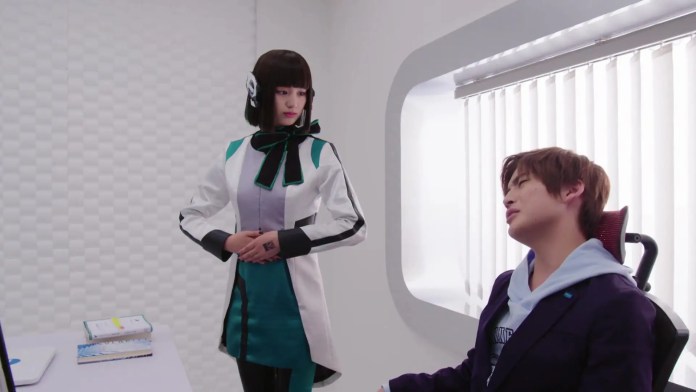
The company manufactures Humagears, highly advanced humanoid artificial-intelligence workers. When a terrorist group begins corrupting Humagears and turning them against humans, Aruto becomes Kamen Rider Zero-One.
Zero-One explores questions that have only become more relevant since it aired:
- Can artificial intelligence develop personhood?
- What obligations do creators have toward artificial beings?
- How does automation change work?
- Can humans and intelligent machines coexist?
- Who bears responsibility when technology is weaponized?
It also features one of the cleanest primary Rider designs in the franchise and an energetic first episode designed to introduce a new era.
Notes..
The production was disrupted by the COVID-19 pandemic, and the latter portion of the story can feel compressed or uneven. Some viewers also find the repeated corporate conflicts less engaging than the opening arc.
Still, it is accessible, modern, visually polished, and currently available legally in the United States through services including Tubi, Pluto TV, and Shout! TV.
Best for Gaming Fans: Kamen Rider Ex-Aid
Kamen Rider Ex-Aid (2016) asks the question nobody else was brave enough to ask: what if doctors fought computer viruses by transforming into video-game superheroes wearing fluorescent armor and cartoon hair?

The hero, Emu Hojo, is a medical intern and gifted gamer. He battles Bugsters, digital life-forms created by a dangerous virus, using transformation devices based on fictional video games.
Ex-Aid combines:
- Medical drama
- Video-game genres
- Rival doctors
- Digital monsters
- Bright arcade aesthetics
- Surprisingly serious questions about life and death
The series is an excellent example of Kamen Rider’s ability to begin with a seemingly ridiculous concept and develop it into sincere character drama.
Notes..
The designs are deliberately excessive. Some newcomers see Ex-Aid’s pink armor, oversized eyes, and molded hair and immediately assume the franchise has finally broken containment.
Give it a few episodes. The visual language begins to make sense once the game motif settles in.
Best ‘Feel Good’ and Comedy: Kamen Rider Fourze
Kamen Rider Fourze (2011) takes place at Amanogawa High School and follows Gentaro Kisaragi, a relentlessly friendly transfer student whose stated goal is to befriend everyone at school.

He gains a space-themed transformation system and forms the Kamen Rider Club with a growing group of students.
Fourze is upbeat, funny, and deeply sincere. It combines:
- High-school drama
- Space exploration imagery
- Clubroom comedy
- Monster mysteries
- A lovable ensemble
- One of the franchise’s most openly kind heroes
Gentaro’s enormous hair and boundless enthusiasm may initially seem like a threat, but his emotional honesty gives the show real heart.
Notes..
Viewers seeking grim drama or constant plot twists may find the school setting too light. The series becomes more serious over time, but friendship remains its central engine.
Best Classic Starting Point: Kamen Rider Black
For viewers who want an older Kamen Rider series without beginning at the absolute beginning, Kamen Rider Black (1987) is a good choice.

Kotaro Minami and his adoptive brother Nobuhiko are abducted by the cult-like organization Gorgom and altered as candidates to become its next ruler. Kotaro escapes and becomes Kamen Rider Black, while Nobuhiko’s fate hangs over the story.
Kamen Rider Black combines:
- A tragic central relationship
- Classic practical monster effects
- Strong motorcycle imagery
- Atmospheric villains
- Straightforward heroic storytelling
- A darker 1980s visual tone
It preserves the classic cyborg tragedy of the original Rider while presenting it through a more polished late-Showa production.
Notes..
It remains an older episodic television show. Modern viewers should expect repeated formulas, slower stretches, and effects created through costumes, miniatures, pyrotechnics, and stunt performers rather than digital spectacle.
That practical texture is part of its charm.
So Which One Should You Actually Choose?
Here is the simplest version:
| If you enjoy… | Start with… |
|---|---|
| Mysteries and buddy-detective stories | Kamen Rider W |
| Grounded supernatural drama | Kamen Rider Kuuga |
| Rival heroes and moral conflict | Kamen Rider Ryuki |
| Serialized science fiction | Kamen Rider Build |
| Modern battle-royale action | Kamen Rider Geats |
| Artificial intelligence and technology | Kamen Rider Zero-One |
| Video games and wild visual design | Kamen Rider Ex-Aid |
| Friendship and lighter comedy | Kamen Rider Fourze |
| Classic practical Tokusatsu | Kamen Rider Black |
None of these choices is a binding contract. Watch two or three episodes. If the characters and premise don’t grab you, try another season.
Kamen Rider changes enough from year to year that disliking one series tells you almost nothing about whether you will enjoy the franchise.
Where to Watch Kamen Rider in the United States
Legal availability remains one of the franchise’s most frustrating subjects.
The situation is much better than it was years ago, when Western fans often relied entirely on unofficial fan-subtitled releases. However, only a portion of the franchise is currently licensed for mainstream U.S. streaming.
As of July 2026, verified options include:
Tubi
Tubi currently carries several complete subtitled Kamen Rider series free with advertisements, including:
- The original Kamen Rider
- Kamen Rider Kuuga
- Kamen Rider Ryuki
- Kamen Rider Zero-One
Availability can change, and Tubi’s listings may vary by region.
Shout! TV and TokuSHOUTsu
Shout! TV’s TokuSHOUTsu collection offers officially licensed Tokusatsu programming, including Kamen Rider titles.
Some episodes can be watched on demand, while TokuSHOUTsu also operates as a streaming channel through supported platforms.
Pluto TV
Pluto TV currently maintains a free Tokusatsu collection in the United States that includes Kamen Rider programming such as Kuuga and Zero-One.
The exact on-demand selection can rotate.
Crunchyroll
Crunchyroll currently streams FUUTO PI, the animated continuation of Kamen Rider W, along with Fuuto PI: The Portrait of Kamen Rider Skull.
Crunchyroll should not be treated as a comprehensive source for the live-action Kamen Rider franchise, but it is a legitimate way to enter the world of Fuuto.
Physical releases
Official North American Blu-ray releases exist for selected series, though availability and pricing vary. Physical media can be particularly useful when a streaming license disappears, as streaming licenses enjoy vanishing immediately after someone recommends a show.
Always check the current listing before publishing or purchasing. Licensing changes, regional restrictions, and catalog removals can make even a recently accurate guide obsolete.
Should You Start With the Original 1971 Series?
You certainly can.
The original Kamen Rider remains historically important, inventive, and enormously influential. Its physical stunt work and eerie monster stories still have real energy.
However, it is not mandatory viewing for newcomers. Starting there purely out of obligation can make the franchise feel like homework.
Watch it first when:
- You enjoy classic Japanese television
- You appreciate practical stunt work
- You want to see where the franchise’s ideas began
- You have a high tolerance for episodic storytelling
- You regard rubber monsters as an artistic benefit rather than a production limitation
Otherwise, begin with a modern or Heisei series and return to the original after the franchise has captured your interest.
One Final Rule: Start With What Sounds Fun
Kamen Rider fans can argue endlessly over the ideal first series. That is partly because the franchise has produced enough radically different shows for every recommendation to be both correct and completely wrong for someone else.
A serious-drama fan may adore Kuuga and bounce off Fourze. A gaming fan may embrace Ex-Aid immediately while another viewer needs several episodes to recover from its colors. Someone attracted by modern action might love Geats, while a classic Tokusatsu fan may be happiest watching stunt performers launch motorcycles over suspiciously fragile scenery.
There is no entrance exam.
Choose the premise that makes you curious. Watch a few episodes. Learn the terminology as it appears. Do not worry about crossovers, rankings, completion lists, or whether a stranger online considers your choice “essential.”
The best first Kamen Rider series is not necessarily the most important, popular, serious, or critically acclaimed. It’s the one that makes you want to watch the next episode.